When the Sony RX1R III was released earlier this year, it’s price point and size immediately invited comparisons with the Leica Q3. Which was better and why? I had the chance to find out.
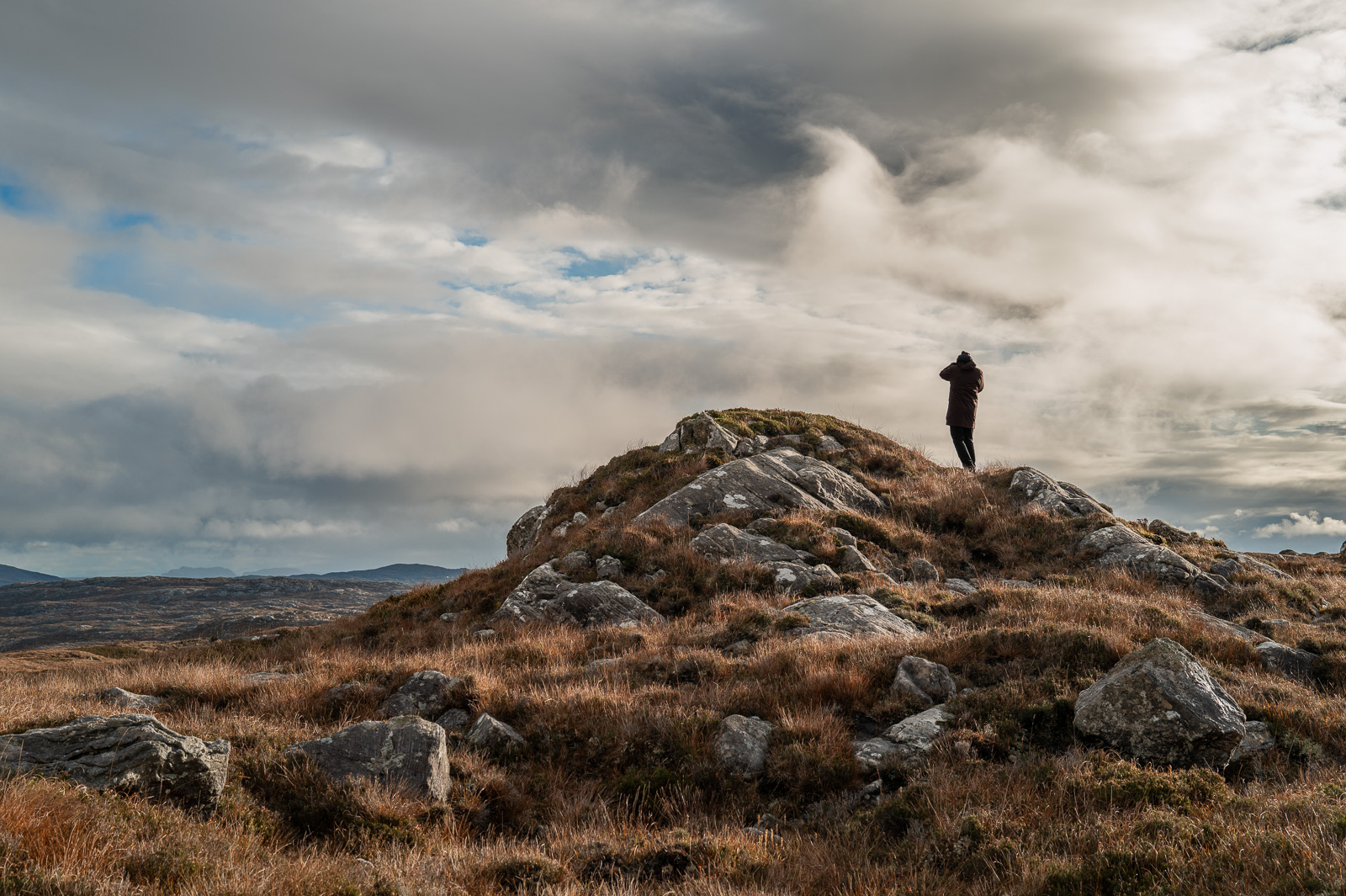
RODEL, NA H-EILEANAN SIAR, SCOTLAND
LEICA Q3 43
Very few photographers need a Sony RX1R III or Leica Q3. There are less expensive alternatives that will allow you to express your creative vision. But some of us are undeniably drawn to these cameras because of their compact size and how seamlessly they travel with us.
Small cameras let you move through the world differently than larger ones. The trade-off of a small camera, however, is usually found in compromised image quality from smaller sensors and lenses. These two cameras side-step that compromise by pairing state-of-the-art full-frame sensors with exceptional lenses — among the best you can get.
Because they are so expensive, it’s easy to fall into analysis paralysis when choosing between them, or to second-guess your decision after buying one. The only real way to answer the question is to use them side-by-side in the field to find out, which isn’t usually easy to do.
On a recent photography trip to Scotland with friends, we got lucky and ended up with a chance to directly compare the RX1R III with both a Leica Q3 and Q3 43 both out in the countryside and shooting street scenes in the city. We took our time and really dug into the pros and cons of each camera as we swapped them out between us in the field and talked about the results over dinner each night.
Cut to the chase: The reason to favor the Sony RX1R III is if ultimate portability is non-negotiable. It’s the iPhone Air of the group. It’s the camera to take when you are traveling ultra-light and every single milliliter of space and gram matters — when the alternative is not take a camera of this caliber at all. Outside of that very narrow niche, however, the Leica Q3 takes the lead in handling, lens quality, and joy of use.
Now that you know my conclusion, let’s dig into what’s behind it. But first, let me tell you a bit of my backstory to put it into context.
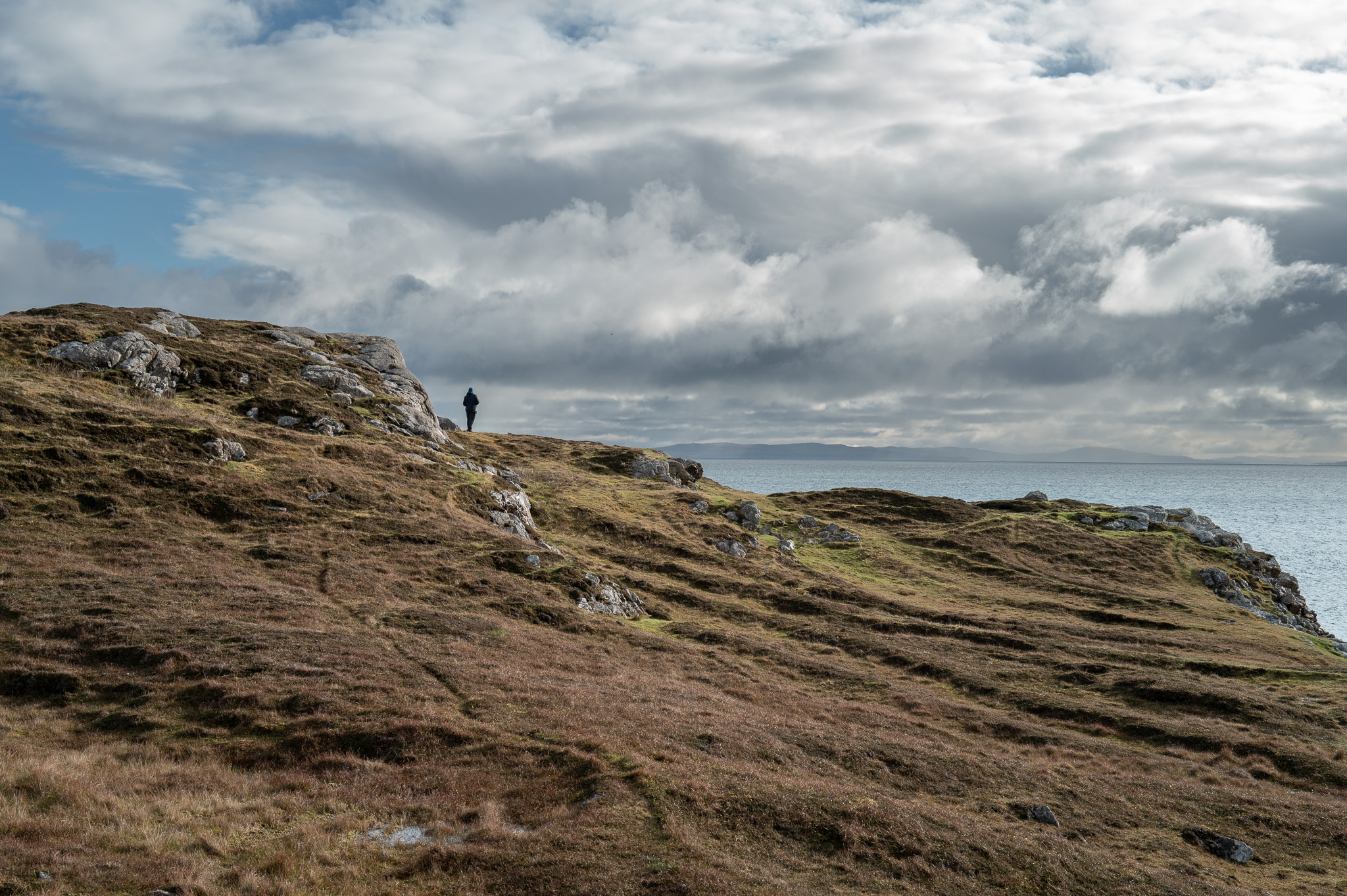
RODEL, NA H-EILEANAN SIAR, SCOTLAND
LEICA Q3 43
Even though I’ve used many different full-size camera systems over the years, small cameras have always held a special appeal to me. Back in the early 1980s, my grandparents taught me to use their Leica M and Leica CL cameras, and how to develop and print film in their darkroom. I loved those cameras, but there was no way I could have one of my own. I used various hand-me-down SLRs for many years, and then got into digital photography in the mid 1990s.
A lot of those early digital cameras were laughable in retrospect. Grainy, slow, and barely usable beyond 4x6 prints. They were portable, but that was about it. Maybe the first really good travel digital camera was the Panasonic GF-1, released in 2008. With a Micro Four Thirds sensor and a 20mm lens (40mm full-frame equivalent), it unlocked a new way of traveling and shooting digitally.
In 2012, Sony dropped a bombshell with the original RX1. With a Zeiss Sonnar T* 35mm f/2 lens fused to a good full-frame sensor and not much more, the RX1 was a revelation. Small enough to fit in a medium-sized jacket pocket, it truly was the best camera you could have with you most of the time. The compromise was that it had lousy battery life and didn’t have an integrated viewfinder, but the image quality and ultimate portability was worth it.
The first digital Leica to really sing was the Leica Q, released in 2015. Its Summilux 28mm f/1.7 ASPH lens was truly excellent, if a bit wide for my taste. The sensor was pretty good. The autofocus was serviceable. It made beautiful images — even people who didn’t know about cameras noticed the difference in the shots I made with it. But, it didn’t ever travel as comfortably with me as the RX1 did. And, I found I had a very strong preference for the 35mm lens.
Jump forward almost a decade to 2023 and Sony had left the RX1 line stagnant while Leica moved forward with the Q2 and then the Q3. The Q3 replaced the good enough sensor of its predecessors with a truly great one, and its autofocus was greatly improved. I still didn’t love the 28mm focal length, but it looked like Sony wasn’t going to update the RX1, so I gave the Q3 a go. But I still missed that 35mm lens.
Then in 2024, Leica finally released a Q with a normal lens: The Q3 43, featuring an APO-Summicron 43mm f/2 lens. Dammit! I was instantly torn. I knew I’d love the focal length, but I wrestled with the idea of selling my Q3 off to fund it. An intense period at my day job took my attention and I pushed off doing anything until later.
When later came and I was able to give it serious thought, Sony decided to get back into the ring and released an updated RX1R III with a state-of-the-art sensor, the same Zeiss 35/2 that I’ve loved over the years, and updated electronics, including essentially the same sensor in the Leica Q3. What a quandary!
It was about then that I made plans to join my friends Hudson Henry and Rick Lepage in Scotland in October 2025 after they finished up two photography workshops on the Isle of Skye. The plan was to scout, have some whiskey, and talk photography. Between everyone in our group, we had all three cameras to compare. What luck — an opportunity for a real comparison.

LUSKENTYRE, NA H-EILEANAN SIAR, SCOTLAND
SONY RX1R III
The RX1R III and the things it has over the Leica Q3 that matter: size and volume, autofocus, and the way its digital crop works.
Comparing height, width, and depth doesn’t communicate how tiny the Sony is in comparison to the Leica, or any other full-frame camera. It’s the volume and weight of the camera that really sets it apart. The RX1R III is roughly half the volume of the Q3. It’s smaller than the APS-C Fujifilm X100VI! And it weighs under 500g, compared to almost 800g for the Leica Qs. You can simply fit it in around more things in your backpack, and you can even sneak it into some jacket pockets.
The RX1R III also has the better autofocus. While Leica’s autofocus has consistently improved over the years and is now firmly in the good category, the RX1 has Sony’s latest preternaturally great autofocus. It’s faster and so more confident than Leica’s system. You never have to think of it. The Leica autofocus isn’t bad, but Sony’s is on a whole different level.
Finally, the way that Sony’s digital crop works is better. In a stylistic nod to Leica’s rangefinder history, the Leica Q3 puts in crop lines while you see the whole frame of the sensor. It’s sentimental and cute and it‘s representative that you’re going to get the full 61 megapixels in a raw file. The RX1R, however, just zooms the image you see in the viewfinder or on the back screen. When you’re shooting at a 50mm equivalent crop, you see that crop. This is simply better: What you see is what you get.

URGHA, NA H-EILEANAN SIAR, SCOTLAND
LEICA Q3
Compared with the RX1R III, the Leica Qs have noticeably better lenses, a simpler and more intuitive user interface, a better EVF, image stabilization, weather-sealing, a flip-screen, and integrate better with an iPhone or Android device.
As good as the RX1’s Zeiss 35/2 is — and it does deliver the goods every time — the two Leica Q lenses are just that much better. Not only do they deliver the goods, they do so in a way that’s almost otherworldly. I was frequently surprised with the results when reviewing images, sometimes to the point of saying expletives under my breath. The images, especially from the 43mm lens, often give me the same feeling that I used to get reviewing chromes on a light-table with a loupe compared to looking at a print made from a negative.
The user interface of the Q3, both physical controls and software, feels like they were designed by photographers for photographers. Intuitive and natural, everything does what you expect it to do and doesn’t require futzing around at all. While the RX1 has Sony’s latest and much-improved menu system, it’s still more complicated and what you want is often a bit buried compared to the Leica interface. As well, the physical controls on the Sony are cramped in comparison to the Leica. Sony could follow Leica’s lead here and simplify more.
The RX1’s EVF is… perfectly usable. It’s small with a small viewing area, but that’s understandable because the camera is so small. I’m not sure what more can be done there. But, not only is the Leica Q3s EVF bigger, it has double the resolution and is much more comfortable to use. It’s like when we went from regular resolution displays to Retina displays on the iPhone. It’s something that you didn’t know you wanted until you have it. Then you really want it.
Moving on to image stabilization, the Q3’s system is really good. The RX1 simply doesn’t have image stabilization. A decade ago, the charm of having the smallest full-frame camera in the world more than made up for the lack of image stabilization. In 2025, it’s a bit of a handicap. The same goes for weather sealing. I never had a problem with my RX1 in inclement weather, but I wasn’t ever as cavalier with it as I was with other cameras. It’s a complete miss that Sony didn’t put better weather sealing into the RX1, especially since the gaskets wouldn’t weigh anything or take up any more space.
As for the flip screen, the Q3 sports one that allows for shooting low or high. It’s baffling that this iteration of the RX1 doesn’t have one, especially since the previous mark II iteration did. Not having it in the current version feels like a serious regression, especially since the EVF is so cramped. I wasn’t sure this was a relevant factor until shooting the cameras side by side and learning how much I did like using the flip screen while walking the streets of Glasgow or hiking on dunes on the Isle of Harris.
Finally, and this also didn’t really sound like much of a deal until using the cameras side by side, Leica’s iOS app is really good and integrates with the Q3 perfectly. The Q3 always grabs the latest GPS location from the phone any time its within range, and the app can wake up the camera remotely in your bag to review images. By comparison, the Sony app gets the job done if you want to review or pull images, but it’s rather clunky. And, it only connects to the camera when the camera is powered on, which means that there’s not auto update of GPS location.
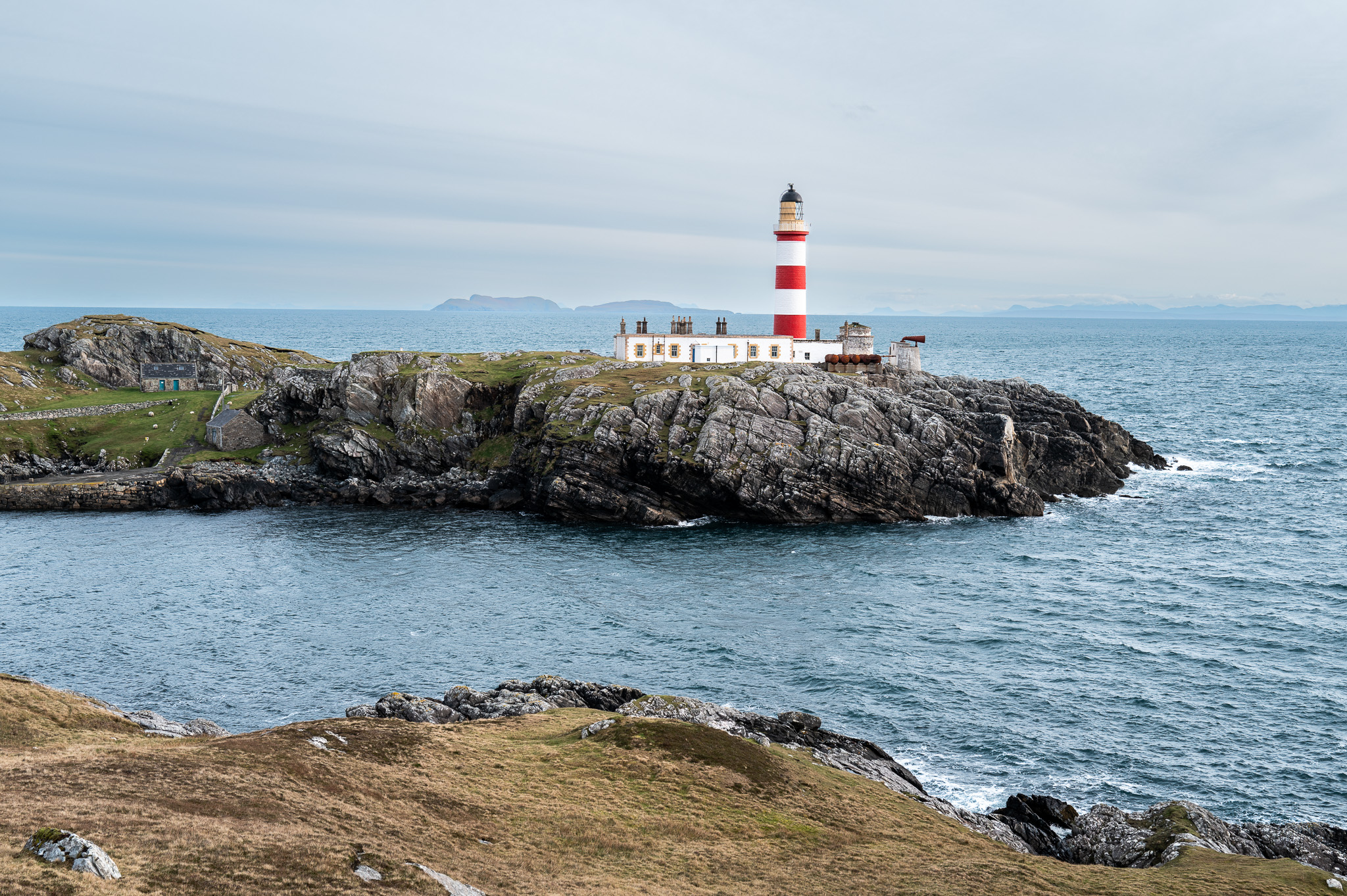
SCALPAY, NA H-EILEANAN SIAR, SCOTLAND
LEICA Q3 43
If any of these cameras existed in isolation from each other, I’d be hard pressed to complain about anything, other than the price tag. They are all incredible. I would have been perfectly happy photographing in Scotland’s countryside and cities with just the Sony RX1R III. No question at all. It’s a great camera.
But the cameras don’t live in isolation from each other. If you put all three down next to each other and tell me I can only have one for the rest of my life, I’m going to grab the Leica Q3 43 and run for the door. It wins on joy of use and the focal length is amazing. I’ll miss the ability to put it into the same tight spaces I could fit the RX1R III, but I’ll manage.
Why the 43mm focal length? When I first picked up the Q3 43 and put it up to my eye and framed a shot, I muttered “mother fucker, this is it” under my breath. When I saw the resulting shot on the screen, I said the same thing again, quite a bit more loudly. That feeling repeated each and every time I picked up the camera in Scotland and made photographs. The 43mm field of view just feels really good to me. Leica is definitely onto something.
Interestingly, our group split right down the middle on lens choice for the Q3: half preferred the 28mm frame, half preferred the 43mm. To me, 43mm much hits the same sweet spot that 35mm does. On the other hand, I can believe there’s someone out there who dislikes both 28mm and 43mm for everyday carry, but finds 35mm just perfect. Creativity is funny that way.
I’ll finish by repeating my opening point: very few people really need one of these cameras. For some, they’re like designer bags or fancy watches — jewelry to show off and show status. For others, they’re amazing tools that let them make photographs wherever they go. If you’re in a position where you’re choosing between them, I hope this helps you find the one that fits your way of seeing.
As for me, I’ve got some juggling to do as I couldn’t quite bring myself to nick my friend’s Q3 43 before leaving Scotland.
Hi. I’m Duncan Davidson. I’m an software developer and engineering leader with a career spanning three decades. I am the creator of Apache Tomcat and Apache Ant. Recently, I served as Vice President of Developer Productivity and Technical Advisor to the CEO at Shopify. Before that, I was a CTO in Residence at Microsoft for Startups.
I’m also a photographer. Notably, I covered the main stage for TED Conferences from 2009 to 2016. These days, my photography work is strictly for myself and I write about it as much as I do technical topics.